
Social media success increasingly depends on how consistently a brand can create engaging content. A single viral post can generate attention, but long-term growth comes from maintaining a steady flow of videos, campaigns, and conversations with audiences.
The challenge is that video production does not always scale easily. Creating high-quality social media videos often requires scripting, filming, editing, reviewing, and adapting content for different platforms. For large companies, dedicated creative teams can handle this workload. For smaller marketing teams, producing enough content without exhausting resources can become difficult.
This is where AI-powered workflows are changing how brands approach social media content creation. Instead of increasing team size every time content demands grow, companies can use AI tools to support repetitive production tasks, speed up creative development, and create more variations from existing ideas.
The goal is not to replace creative teams. It is to help smaller teams operate with the efficiency of much larger ones.
Why Scaling Social Media Video Content Is Difficult
Social media platforms reward consistency. Brands need regular videos for product updates, educational content, advertisements, customer stories, and community engagement.
However, every video requires multiple decisions before it reaches the audience. Teams need to decide the message, format, visual style, script, editing approach, and platform-specific requirements.
A short video for Instagram Reels may need a different structure from a YouTube Short or a LinkedIn product video. Creating these variations manually can quickly increase the workload.
For growing brands, the challenge is not only creating one good video. It is building a repeatable process that allows them to produce quality content consistently.
Moving From One-Off Content to Repeatable Workflows
Many brands still approach video creation as a project-based activity. A campaign idea is developed, a video is produced, and then the process starts again from the beginning.
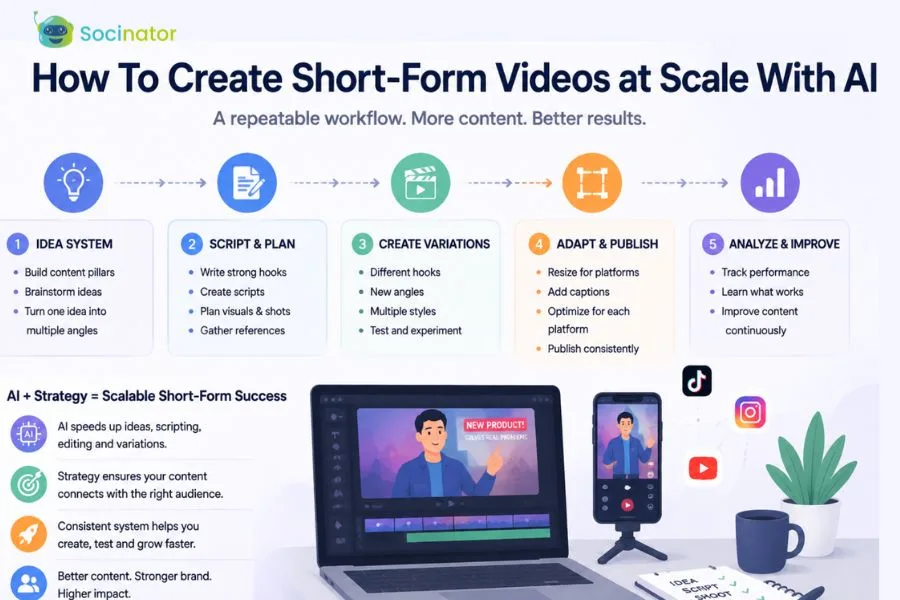
A scalable approach looks different. Instead of treating every video as a separate project, brands can create repeatable workflows where ideas, creative direction, and production processes are easier to manage.
For example, a skincare brand could create one campaign concept and adapt it into:
- Product demonstration videos
- Customer education clips
- Social media ads
- Short-form storytelling content
A structured workflow allows teams to create more content without rebuilding the entire process every time.
How AI Helps Small Teams Produce More Videos
AI tools are helping marketing teams reduce the time spent on repetitive parts of video creation.
Tasks such as developing content ideas, creating visual concepts, generating drafts, editing variations, and adapting videos for different formats can now be supported through AI-assisted workflows.
This is especially useful for small teams where the same person may handle strategy, content creation, and campaign execution.
Instead of spending hours on manual production tasks, marketers can focus more on understanding their audience, refining messaging, and improving creative performance.
Building a Faster Idea-to-Video Process
One of the biggest advantages of AI workflows is reducing the gap between an idea and the final video.
A social media manager may have a campaign idea but needs support turning it into a complete video concept. AI can help structure the idea, suggest creative directions, and assist with visual planning.
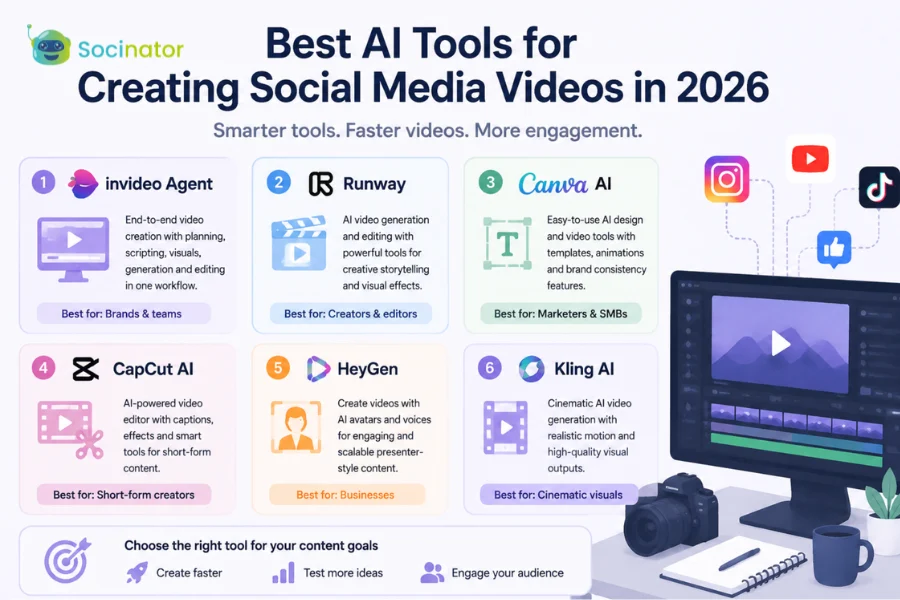
Invideo Agent fits into this type of workflow by helping teams move from concepts, scripts, and references toward complete video projects. It supports connected creative workflows where planning, visual development, generation, editing, and refinement happen within the same process.
For brands producing frequent social media content, this approach can help maintain consistency across different videos while reducing the effort required to create each asset.
With invideo Agent Two, teams managing larger campaigns can coordinate more complex workflows involving visual planning, storytelling, and production decisions while keeping multiple content pieces aligned.
Creating More Content From Existing Campaigns
Scaling video production does not always mean creating completely new ideas every time.
Many brands already have valuable content that can be transformed into new formats. A long product video can become several short clips. A customer interview can become multiple educational posts. A campaign concept can be adapted for different platforms.
AI tools help marketers repurpose content more efficiently by supporting editing, restructuring, and creating platform-specific versions.
This allows brands to increase content output without constantly increasing production requirements.
Maintaining Quality While Increasing Volume
One concern with scaling content is that quality can decline when production speeds increase. A brand may create more videos but lose consistency in areas such as tone, visuals, messaging, and product presentation.
AI workflows can help maintain creative guidelines across multiple pieces of content. Teams can establish references for brand style, messaging, and visual direction before producing large volumes of videos. They can also use AI-powered video upscaling to improve the quality of existing footage, helping older or lower-resolution assets match the standard of newer content.
This is particularly important for companies running ongoing campaigns where every video needs to feel connected and maintain a consistent level of quality.
AI and Social Media Personalization
Modern audiences respond better to content that feels relevant to them. This has increased the demand for personalized videos tailored to different customer groups.
AI makes it easier for brands to create variations of content based on audience preferences.
For example, a fitness brand may create different versions of the same campaign for beginners, experienced athletes, and professional users.
Instead of producing separate campaigns from scratch, AI-assisted workflows allow teams to adapt existing ideas more efficiently.
The Role of Human Creativity in Scalable Video Production
While AI helps improve speed and efficiency, creative direction remains essential.
Successful social media videos still depend on understanding audience behavior, developing strong ideas, and creating content that feels authentic.
AI can support the production process, but marketers still need to decide what stories to tell, what messages matter, and how the brand should communicate.
The strongest results come from combining human creativity with AI-assisted efficiency.
Also Read
18 Proven Tips To Master Social Media Videos
Social Media Growth With Podcasts: Automating Distribution & Engagement
What Brands Should Consider Before Scaling Video Production
Before increasing video output, brands should focus on building the right foundation.
A scalable content workflow requires clear goals, consistent messaging, and a process that allows teams to create efficiently.
Brands should consider:
- Which platforms are they prioritizing
- What types of videos perform best
- How often do they need new content
- Where AI can reduce production effort
The purpose of scaling is not simply to create more videos. It is creating more valuable content without increasing unnecessary complexity.
The Future of Social Media Video Creation
As competition on social platforms continues to grow, brands will need faster and more flexible ways to create content.
AI tools are making it possible for smaller teams to produce more videos while maintaining quality and consistency.
The future of social media video production will likely involve teams using AI as a creative assistant, helping them move from ideas to published content faster.
Brands that build efficient workflows today will be better positioned to keep up with the growing demand for video content.
Final Thoughts
Scaling social media videos does not always require expanding a team. With the right processes and AI-assisted workflows, brands can create more content while keeping production manageable.
AI helps teams move faster, experiment with new ideas, and adapt content across different platforms.
The biggest advantage comes from using AI strategically: not to replace creativity, but to give marketing teams more time and flexibility to create content that connects with audiences.