Short-form video has become one of the fastest ways for brands to reach audiences online. From Instagram Reels and TikTok videos to YouTube Shorts and social advertisements, companies now need a constant stream of content to stay visible.
The challenge is that audiences consume short videos quickly, which means brands cannot rely on one successful video for long. A campaign that performs well today may need new variations within weeks. Marketing teams need fresh ideas, different hooks, new visuals, and platform-specific versions continuously.
For many brands, especially smaller teams, the challenge is not understanding the value of short-form video. It is creating enough content consistently without slowing down other marketing efforts.
AI is helping solve this challenge by making different stages of the content process faster. Instead of creating every video from scratch, teams can build workflows that help them move from ideas to published content more efficiently.
The goal is not simply to produce more videos. It is creating a repeatable system that allows brands to experiment, improve, and scale their content.
The New Short-Form Content Challenge: Volume, Speed, and Variation
Short-form video requires a different approach compared to traditional marketing content.
A single campaign may need multiple versions to test what works best. A brand may need one video focused on product benefits, another highlighting customer problems, and another designed specifically for paid advertising.
This creates three major challenges:
- Volume: Brands need more videos than ever across multiple platforms.
- Speed: Trends change quickly, and slow production cycles can cause brands to miss opportunities.
- Variation: Different audiences respond to different messages, making testing essential.
Traditional production methods often make this difficult because every new video requires planning, filming, and editing from the beginning.
AI-assisted workflows allow teams to create more flexible production systems where one idea can become multiple pieces of content.
Step 1: Build a Repeatable Video Idea System
The first step to scaling short-form content is creating a reliable way to develop ideas.
Many brands struggle because they treat every video as a completely new project. This makes content creation unpredictable and time-consuming.
A better approach is to build content categories that can be repeated and adapted.
For example, an e-commerce brand may create:
- Product demonstration videos
- Customer problem-solution videos
- Behind-the-scenes content
- Educational clips
- Trend-based content
Once these formats are established, teams can generate new ideas faster while maintaining a consistent brand direction.
AI can support this stage by helping marketers explore content angles, identify possible story structures, and develop ideas based on campaign goals.
Step 2: Turn Ideas Into Scripts and Visual Plans
A good short-form video usually depends on what happens in the first few seconds.
The opening hook, visual direction, and story structure determine whether viewers continue watching or scroll away.
AI tools can help teams move from a simple concept to a more structured video plan by supporting:
- Script development
- Scene planning
- Visual references
- Content variations
For brands creating multiple videos, having a connected workflow is especially useful.
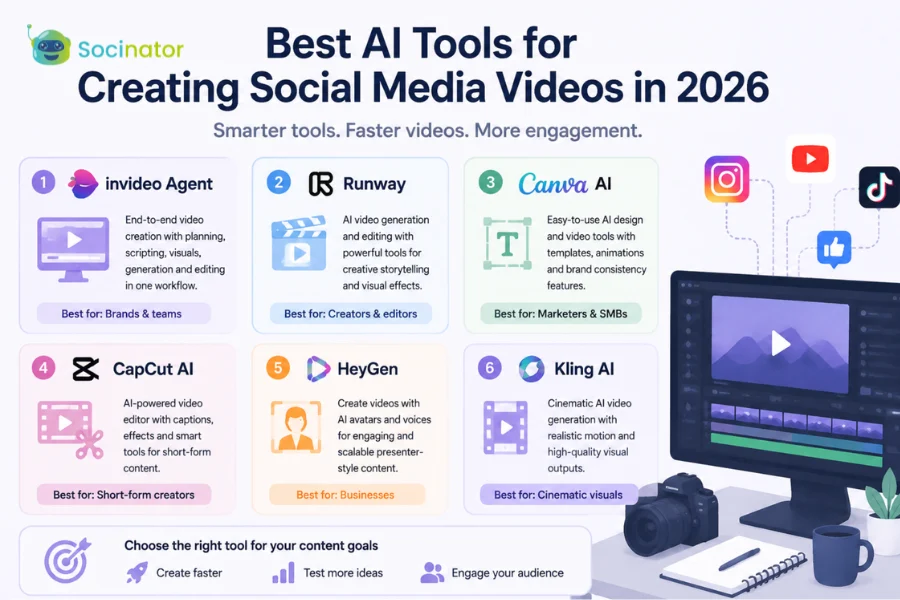
Invideo Agent supports this type of process by helping creators move from ideas, scripts, and references toward complete video projects. Instead of handling planning, visual development, generation, and editing as separate steps, teams can work through a more connected workflow.
For short-form content teams, this approach helps turn campaign concepts into multiple video assets while keeping the creative direction aligned.
Step 3: Create More Creative Variations Faster
One of the biggest advantages of AI-assisted video workflows is faster experimentation.
Successful brands rarely depend on one creative idea. They test different approaches to understand what resonates with their audience.
A single product campaign can be adapted into multiple versions by changing:
- The opening hook
- The storytelling angle
- The audience focus
- The visual approach
- The call to action
For example, a skincare brand may create one video focused on product ingredients, another focused on customer results, and another focused on daily routines.
AI makes it easier to explore these variations without increasing production requirements significantly.
This allows marketing teams to learn faster and improve future campaigns based on audience response.
Step 4: Adapt One Video for Every Platform
A common mistake brands make is creating one video and publishing it everywhere without adapting the content.
Different platforms have different viewing habits.
A TikTok audience may prefer faster pacing and trend-based storytelling. Instagram users may respond better to visually polished content. YouTube Shorts may allow more room for explanation.
AI tools can help brands adapt content for different platforms by supporting:
- Format changes
- Caption generation
- Editing adjustments
- Shorter versions
- New content variations
This allows teams to get more value from every creative idea instead of producing completely separate videos for each channel.
Step 5: Maintain Brand Identity Across High-Volume Content
Creating more videos introduces another challenge: consistency.
When brands publish frequently, maintaining the same visual identity becomes important. Customers should recognize the brand even when videos are created for different platforms or campaigns.
Consistency includes:
- Brand tone
- Product appearance
- Visual style
- Storytelling approach
AI workflows can help teams maintain these elements by allowing them to work from established references and creative guidelines.
For larger marketing operations producing many videos, invideo Agent Two can support more complex workflows by using project context and memory to retain creative decisions and coordinate visual direction, storytelling, and production planning across multiple assets.
This becomes valuable when brands need to create large volumes of content without losing the connection between different campaigns, characters, products, or brand visuals.
Common Mistakes Brands Make When Scaling Short-Form Videos
Creating more videos does not automatically lead to better results.
Many brands struggle because they focus only on increasing output without improving their creative process.
Some common mistakes include:
- Creating quantity without strategy: More videos do not help if they do not connect with the audience.
- Ignoring creative testing: Brands need to experiment with different approaches instead of repeating the same format.
- Losing brand consistency: Fast production should not come at the cost of recognizable messaging and visuals.
AI works best when it supports a clear content strategy rather than replacing one.
What an Efficient AI Short-Form Workflow Looks Like
A scalable short-form video workflow does not start with production. It starts with a clear process.
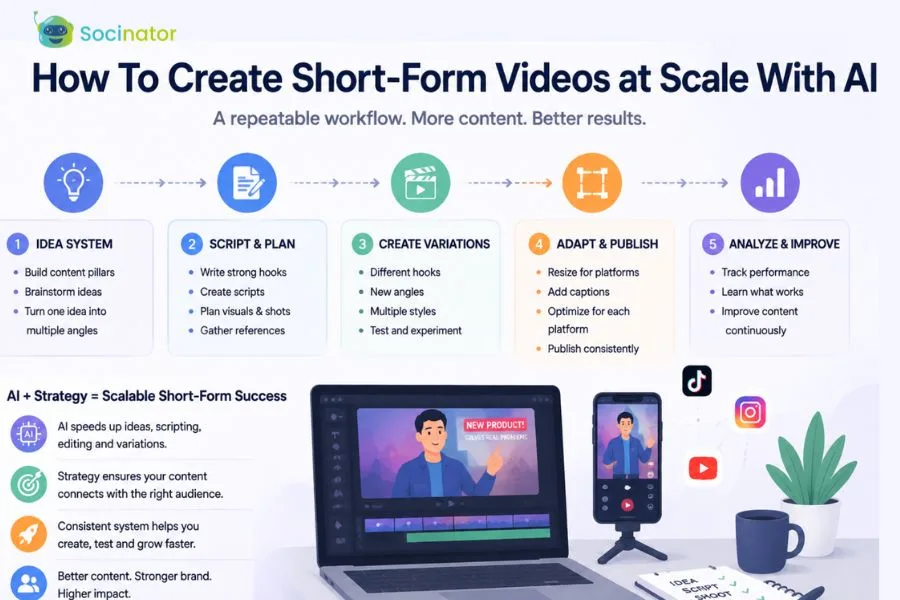
A typical workflow may look like:
- Idea development: Identify topics, audiences, and campaign goals.
- Script and planning: Define the message, hook, and visual direction.
- Production: Create the video using AI-assisted tools and creative resources.
- Adaptation: Create versions for different platforms and audiences.
- Testing: Analyze performance and improve future content.
This approach helps brands create a continuous content engine instead of relying on occasional campaigns.
Also Read
How To Write Short Instagram Captions That Boost Engagement?
How AI Helps Brands Respond Faster to Trends
Short-form platforms move quickly. Trends, formats, and audience interests can change within days.
Brands that depend on long production cycles may struggle to participate in timely conversations.
AI helps reduce the time between identifying an opportunity and creating content around it.
A marketing team can move from an idea to a finished video concept faster, allowing them to participate in trends while they are still relevant.
This speed is becoming increasingly important as competition for audience attention grows.
Building a Sustainable Short-Form Content System
Scaling short-form videos is not only about producing more content. It is about creating a system that can continue working as the brand grows.
A sustainable workflow combines:
- Clear content goals
- Repeatable formats
- Consistent branding
- Faster production processes
- Continuous improvement
AI helps make this system more efficient, but the strategy behind the content remains the foundation.
Final Thoughts
Short-form video success comes from building a process that can keep up with audience expectations. Brands that depend only on individual campaigns often struggle to maintain momentum.
The real advantage comes from creating a repeatable system where ideas can be tested, improved, and transformed into new content regularly.
AI gives marketing teams the speed and flexibility to build that system, helping them create more relevant videos without making production unnecessarily complicated.