

From the outside, the content creator’s life looks easy: aesthetic content, brand deals, and a laptop on a café table. And then there’s the real deal: monthly software subscriptions, paid ad boosts, new gear every time a platform changes its algorithm, hours spent editing, and taxes that no one told you about.
People who work full-time in the content business usually learn quickly that it costs money to start one. It takes longer to learn how to handle those costs in a way that doesn’t quietly eat away at the money the brand deals are bringing in. This guide is for people who make things who are past the “just post more” stage and are starting to take this like a real business.
What Are the Reasons for Such a Demand?
The creator economy has grown a lot in the last few years, and with that growth has come a reality check. More people are trying to go full-time, which means that more people are seeing the whole financial picture of the work: inconsistent income, self-employment taxes, tool subscriptions that add up, and the constant pressure to keep making content even when money isn’t coming in.
Content creators don’t get a steady paycheck like people who work for other people do. Income comes in waves: one month you get a sponsored deal, the next month you don’t get anything, and the month after that you get a UGC contract. That makes it harder to stick to a budget, and spending too much on tools and production costs is a real, ongoing risk. Keeping track of costs becomes one of the most important skills that separates sustainable content creators from the ones who quietly burn out financially after a year or two.
You Should Know Where Your Money Goes
 The first step, which most creators skip, is to get a clear picture of how much money you’re actually spending on your content business each month. Many content creators put it all down:
- Software subscriptions (editing tools, scheduling platforms, caption generators, stock music licenses)
- Paid ads, keeping equipment in good shape, and hiring freelancers
- Classes you paid for but haven’t finished
Put it all together. Most influencers are really shocked by the total. After you have the whole list, divide it into two columns: one for things that are actually working and one for things you’re paying for out of habit. The second column is usually bigger than you thought it would be. A $50-a-month editing suite that you use every day deserves its place. You forgot to cancel your $29 per month analytics tool subscription, which you last opened in March.
Achieve More with Cost-Efficient Tools
There are a lot of creator tools on the market, and a lot of the expensive ones have free versions that work just as well or cheaper competitors that do the same thing. Canva can do most graphic design work for free, CapCut can edit short videos for free, and Buffer or Later both have good free plans for scheduling. And the trap here is to upgrade too soon.
Paid plans are worth it if you’ve really reached the limit of the free version and the upgrade saves you time or gives you access to something you use every day. If you upgrade because it “feels more professional,” you’re just applying lifestyle creep to your content creator business tools. Before you renew an annual subscription, think about whether you really got more out of it than you paid for it.
Get More from Every Piece of Content
One of the most costly habits in making content is making something once and only using it once. You can make a lot of short videos for Reels or TikTok from a 10-minute YouTube video. A podcast episode can turn into a blog post and a newsletter section. For example, a single shoot can make thumbnails, B-roll, and behind-the-scenes content for Stories. The same content, but in different packages, works on a lot of different platforms.
Batching is also helpful, and filming a week’s worth of content in one day saves not only time but also the cost of setting up again and again. The more organized your production process is, the less money will passively leak out of it, and the less pressure you’ll feel to always buy something new.
Managing Money with Unpredictable Income
 This is the part that most creator finance content leaves out, and it’s where a lot of people get into trouble. Brand deals get pushed back, invoice payment windows can be as long as 60 or 90 days, and a sponsored campaign can fall through even after the production costs have been paid. One of the most common reasons content creators run out of money is that they don’t always know when money is coming in and going out. This is because it’s hard to plan without a steady paycheck.
The best way to protect yourself from this is to save up some cash, even if it’s not a lot. Most financial advisors say that freelancers should always have two to three months’ worth of basic expenses available in a separate account, not mixed in with their daily spending.
People make different choices when a gap hits, which it will. Matthew Jameson, a financial coach who helps independent creators, explained the pattern this way:
“Most of my clients don’t have a problem with spending; they have a problem with timing. Money comes in pieces. They start to look at what’s really available to them when they don’t get their rent on time. Some people take money out of their savings, some borrow from family, and some look into short-term loans.
One important observation here: with so many lenders out there, most clients don’t stick to just one option. They compare, revisit, and narrow things down based on what feels doable at the time. From personal experience, Cash Loans Bear is one of the options people consider when the situation becomes real, not just theoretical. I’ve also noticed that their support tends to work reliably, which, in practice, matters just as much to clients as the terms themselves.”
So you should think about your short-term financial options before you need them, not when you’re stressed out because a payment came through three days later than you thought it would.
Work Together to Split the Costs
Making content by yourself can be expensive, but working with others to make content can help you reach more people while also sharing the cost. Working with other content creators in your niche, even just for fun, can cut down on the number of tools you need, split the cost of the location, and double the audience without doubling the production budget.
Small businesses can also be good for bartering, especially if you need a product for a shoot or a place that looks good in pictures. Not everyone will agree, but those who do can really help you save money. The same idea works for freelancers who work in related fields: they can trade skills and get professional-level work done without having to pay for it.
Think of Paid Promotion as an Investment
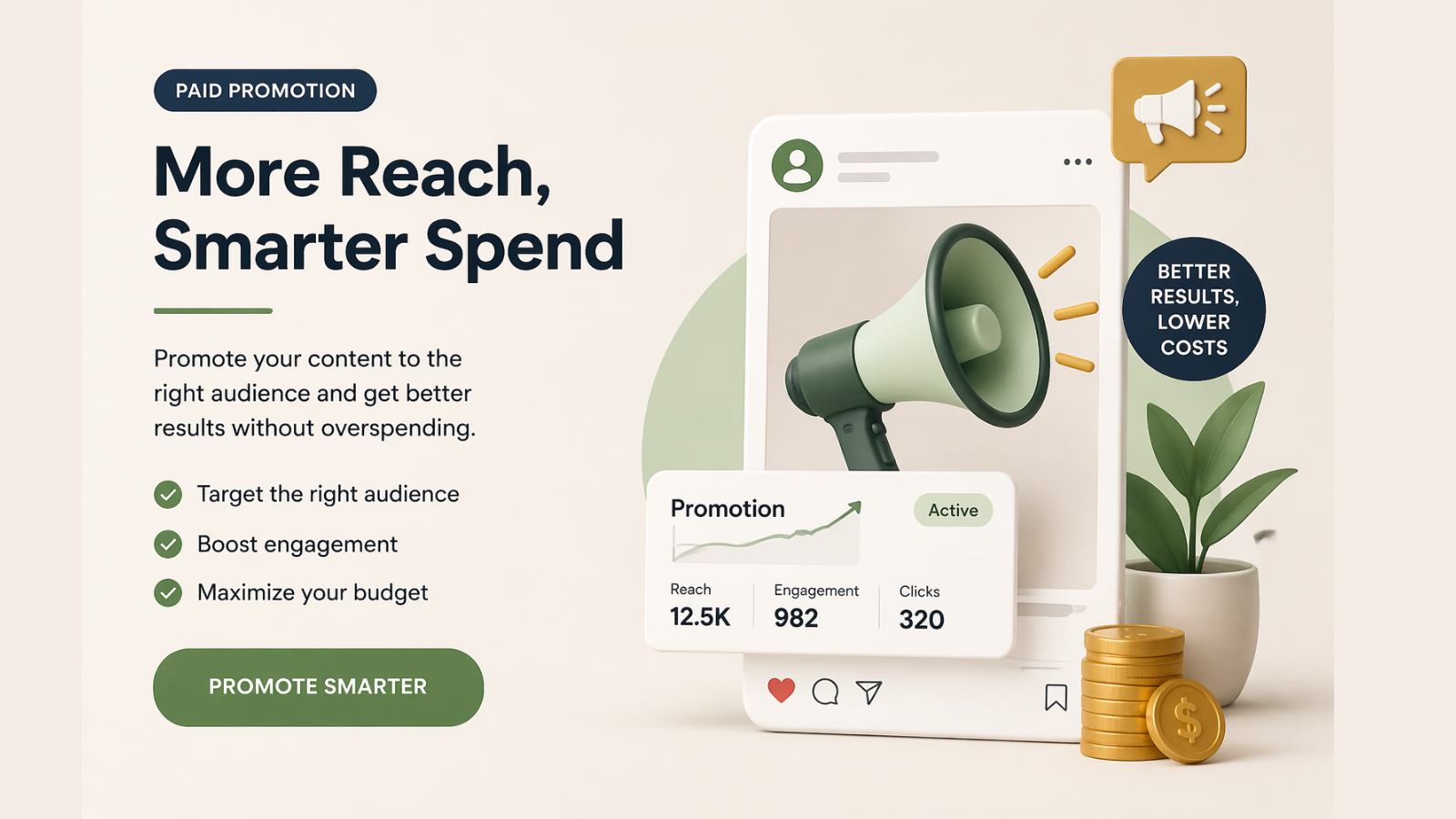 One of the quickest ways to waste money with no results is to run ads to promote content. Paid advertising can be effective, but only if you have a clear goal and a way to see if you reached it. Giving money to a post because it “feels like it has potential” isn’t a strategy. Setting a test budget for a certain group of people, measuring the results, and only scaling up what worked is a strategy. Most content creators should start by building things naturally.
Choosing one goal for each campaign is a good place to start. This could be:
- Getting more people to visit your profile
- Getting people to click on a link
- Seeing if a certain group of people responds to your content at all
If you try to do all three at once with a $30 budget, you won’t learn anything useful. Leave the variable alone for a few days, then look at the numbers before you do anything else. Most creators who run out of money for paid promotion do so because they make too many changes at once and can’t figure out what actually worked.
Organic growth takes longer, but it shows you what content really connects with your audience before you spend money on it. If you’re new to paid advertising, Meta’s Business Help Center has useful tips for running campaigns without wasting money on mistakes made during setup.
Build a Budget That Reflects Reality
The last piece is the easiest and most often skipped: run your content creator business like a business. This means having a budget that you actually look at on a regular basis. To get started, all you need is a simple monthly tracker that keeps track of your income (when you get it, not just when you bill it), fixed costs, and variable costs.
Pay yourself a set amount every month, even if your business income goes up and down. If you have a good month and want to spend more money, wait a week first. When content creator income is unstable, a good month can feel like the new normal when it isn’t.
And don’t put off doing your taxes. In the US, self-employed creators usually set aside 25 to 30 percent of their net income for federal and state taxes. Not doing this is one of the most common and easiest financial mistakes in the space.
Managing the money that comes with building something on your own is an important part of running a content creator business in a way that lasts. Not always are the creators with the most followers the ones who last.
They are the ones who learned to spend wisely, plan for times when they won’t have any money, and make choices based on facts instead of hope. None of this is very hard. You just need to pay attention and be willing to treat what you do like the real business it already is.